

|
Getting your Trinity Audio player ready...
|
Redwood City and surrounding areas had their fair share of headline-grabbing moments in 2023. Redwood City's Elco Yards development unearthed Native American graves, sparking a significant historical debate. Stanford University and Alpha Omega Housing Corporation locked horns over a $32 million dispute involving a fraternity house. In Atherton, the Menlo Circus Club found itself at the heart of a housing policy controversy, reflecting broader state housing tensions.
For food enthusiasts, the openings of Ghostwood Kitchen in Redwood City and Bar and Mademoiselle Colette's in Atherton brought new flavors to the local dining scene.
Keep reading to see what other stories made headlines last year.
10. At long last, Mademoiselle Colette opens Atherton location

Mademoiselle Colette's, a pocket-sized Parisian cafe, opened during the town's 100th anniversary celebration and is located in front of the library.
The cafe's owner, Debora Ferrand, who also has locations in Redwood City, Palo Alto, and Menlo Park, along with a ghost kitchen in Mountain View, said the cafe was anticipated to open in 2022 but was delayed for logistical reasons.
Ferrand, a pasty chef who studied at Cordon Bleu in France, brought prolific French pastry chef Julien Arnaud to the grab-and-go cafe. It offers pastries, sandwiches and desserts.
"Atherton is mostly residential, so people are happy to have something in the neighborhood," said Ferrand, who is an Atherton resident. "It's a place for the neighborhood to meet."
9. Inside Redwood City's hidden pasta factory

From bucatini to linguine, a hidden pasta factory has quietly served the Bay Area freshly made pasta and ravioli for decades. Saporito Pasta is responsible for the housemade noodles in restaurants such as Local Union 271, 888 Ristorante Italiano, Stamp Bar and Grill, The Post, Miramar Beach Restaurant and the Peninsula Creamery, as well as sold at local grocers like Bianchini's Market, Piazza's Fine Foods, Sigona's Farmers Market and Dehoff's Market.
Owners Trish and Greg Battaglia have run the pasta factory for the last eight years, and since taking over the business, it has quadrupled its pasta sales.
And they're looking to expand further: They recently purchased a new plant that will allow them to manufacture meat-based pasta dishes.
8. Ghostwood Beer Company Debuts Family-Friendly Kitchen & Bar
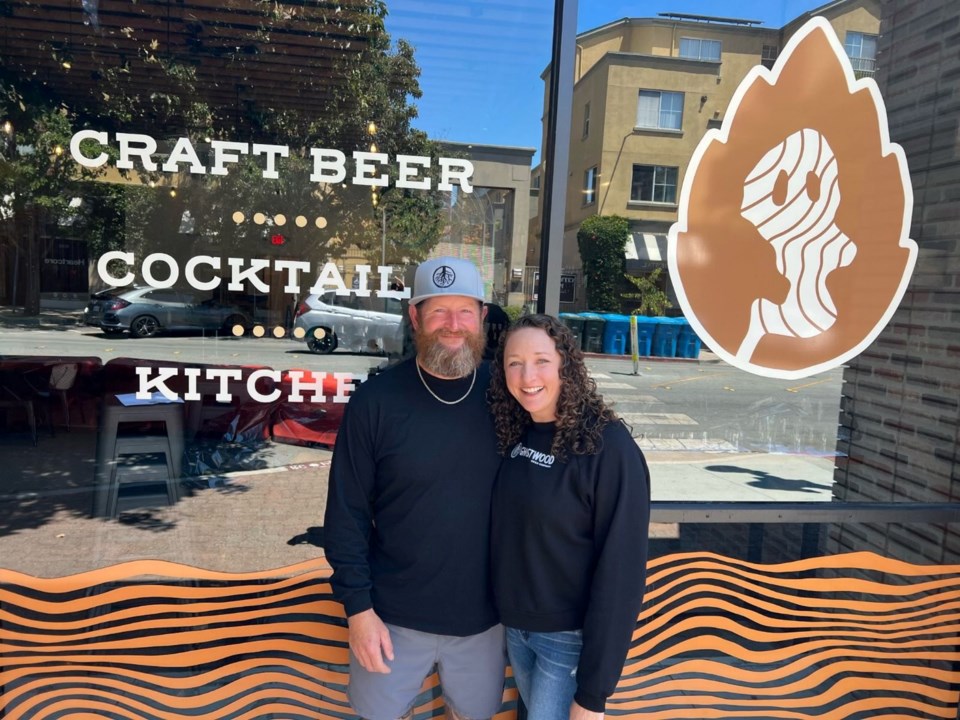
Ghostwood Kitchen and Bar opened in July to add to Redwood City's expanding restaurant and nightlife scene. Dan Williams purchased Ghostwood Beer Company in 2022, doubling its capacity. He originally planned to open a tapas-styled restaurant named "Mezes" after Redwood City's founder Simon Mezes, but COVID-19 threw a wrench in the plans, and Williams later decided to open Ghostwood Kitchen, located at 911 Main Street, to align better with the brewery.
Williams said he envisions the space as a family-friendly gathering place for the community.
"I'd love to see a bunch of kids with their families coming in here after sporting events, people who live within walking distance, making this their "go-to" spot, folks on their lunch breaks," Williams said.
7. Disappeared without a trace: Alice Ku never returned from her 2019 trip to Taiwan. Was she murdered?

In 2019, a Mountain View woman, Alice Ku, joined her husband, Harald Herchen, on a business trip to Taiwan but never returned.
Herchen claimed he last saw her when he dropped Ku off at the train station where she planned to visit her parents. However, her parents were unaware she was in the country or would be staying. The couple allegedly arranged to meet at the airport a few days later, according to emails provided by Herchen, which were later found to be from the same IP address, the hotel the couple stayed at before Ku went missing.
Taiwanese officials believed Ku was murdered and issued an arrest warrant for Herchen based on cyber data and inconsistent statements Herchen made to police. Herchen, who is a prominent Silicon Valley inventor who lives in Los Altos, remains out of custody and Taiwanese police due to a lack of an extradition treaty between the Republic of China and the U.S. Herchen met Ku through an escort service he used for sex.
With no answers to Ku's disappearance, her parents and brother filed a wrongful death lawsuit against Herchen in Santa Clara County Superior Court in 2021. The civil case is still pending.
6. 5 Sequoia High School athletes commit to NCAA Division 1 colleges
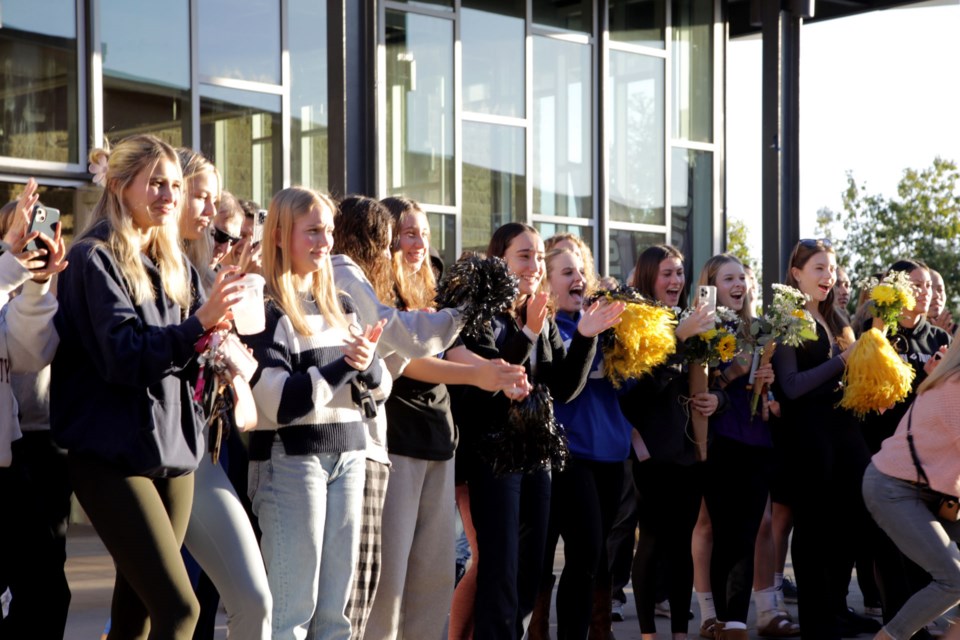
In early November, dozens gathered to witness five Sequoia High School athletes committing to NCAA Division 1 college on the first signing day.
Sequoia High's Athletic Director, Melissa Schmidt, said it's a first for the school.
The five students are Ava Jarolimek, Blessing-Hephzibah Taimani, Abigail Goetz, Ian Holt and Addison Haws. All of them were in front of the school's mural, signing their commitment papers in front of dozens of their family and friends on Wednesday, Nov. 8.
5. A shelter divided: With its staff squabbling, has Pets In Need lost its way?
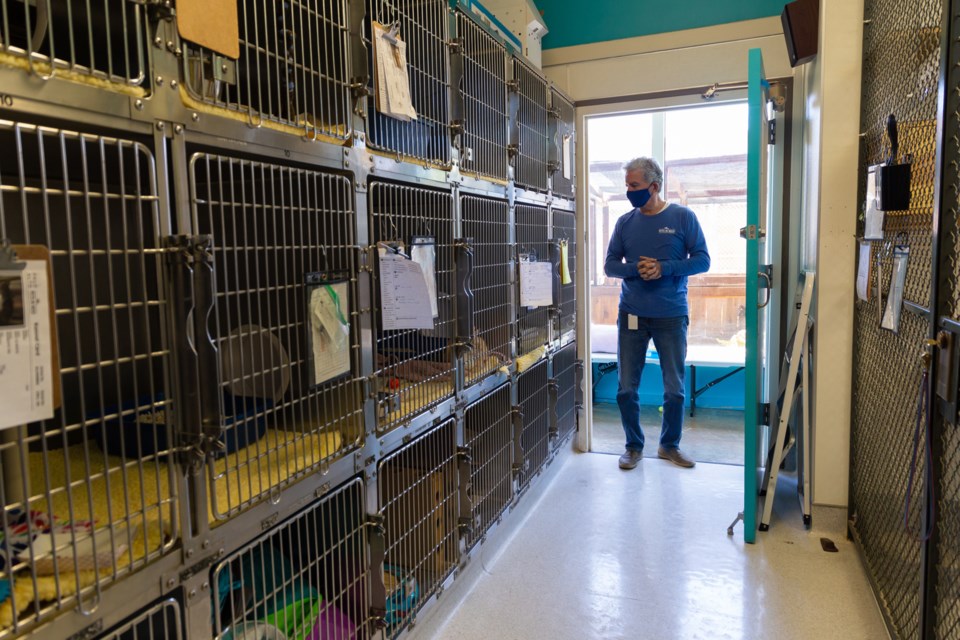
Laura Toller Gardner faced immediate challenges when she stepped into the role of CEO of Pets in Need, a nonprofit with offices in Palo Alto and Redwood City. Facing an expiring contract with the city of Palo Alto, Pets in Need navigated complex negotiations for renewal despite previously announcing non-renewal due to the city's alleged breaches.
However, the nonprofit's challenges were compounded by financial strains, growing workplace discontent, and controversy surrounding Pets in Needs euthanasia rates, which had captured public attention. Accusations surfaced on social media, suggesting a shift from its "no-kill" shelter policy, which leadership strongly denied.
As negotiations with the city progressed, the community remained deeply divided over the issues.
4. Redwood City Winter Storms

In early 2023, a series of intense winter storms brought havoc to Redwood City, San Mateo County and the broader Bay Area, leading to power outages and severe flooding. The storms, which began roughly around New Year's Eve and persisted through March, were marked by atmospheric rivers and a so-called bomb cyclone that inundated the region. In February, strong winds compounded the crisis, downing trees and power lines and leaving more than 64,000 PG&E customers across the Bay Area without electricity. Redwood City was hit particularly hard, with neighborhoods like Friendly Acres, Farm Hill, Palm Park, Redwood Oaks, Woodside Plaza and Redwood VIllage plunged into darkness.
The Redwood City Pulse received an overwhelming number of letters from readers expressing their dismay and anger towards PG&E. These letters painted a vivid picture of the hardships faced by the community, from spoiled food and freezing temperatures to the feeling of being neglected by the utility company.
Although San Mateo County and Redwood City officials had declared a State of Emergency, recognizing the impending storm and the need for state and county resources, it did little to mitigate the community's struggles with PG&E and what they felt was the apparent lack of communication by the utility. The storms highlighted the need for improved infrastructure and crisis management to better withstand such extreme weather events in the future.
We'll be watching the weather this year and keep you posted.
3. Exclusive Atherton club finds itself in crosshairs of housing mandate
Another story that caught readers' attention was one involving the Menlo Circus Club and Atherton's housing element.
Last year, Atherton began eyeing additional properties, including the exclusive Menlo Circus Club, for potential new multifamily and workforce dwellings to align with state requirements for future planning, specifically to craft its Housing Element. The Menlo Circus Club at 190 Park Lane was considered in an environmental study as part of Atherton's efforts to meet the state's housing demands. Still, the Club's leaders were unhappy and even shocked by this consideration. They expressed their concerns in a July 26 letter to City Council stating that the Club was intended as a private, family social club and cited other reasons against its development for housing.
Atherton's council also reviewed other potential housing sites, such as properties on Ravenswood Avenue and the Gilmore House and Knox Playschool sites at Holbrook-Palmer Park. However, the council proposed reducing the density threshold from 20 to 10 units per acre, which prompted concerns over height and other factors. The decision could have affected the town's housing element's state approval. Yet, some council members supported the lower density despite it potentially complicating affordable housing development due to Atherton's high land values.
Residents strongly opposed new housing developments near their homes, citing concerns over neighborhood character, safety and increased noise and traffic. The council then had to weigh state mandates and local concerns. Should the town fail to meet state requirements to appease residents, it would be subject to the so-called builders' remedy, a state provision that allows affordable-housing builders to go around local land-use regulations. Atherton's housing element has already been rejected twice, and the deadline to file its final draft is Jan. 31.
Our sister publication, The Almanac, will continue following this story.
2. Native American graves found at Elco Yards development in Redwood City

The Elco Yards development, a substantial $600 million project spanning 8.3 acres, unexpectedly became the site of a historical revelation thanks to observant business owners near the site who noticed unusual activities. They reported seeing skeletal remains, including skulls and multiple skeletons, being removed from the ground. Throughout 2022 and 2023, while excavating for an underground parking structure at 1601 El Camino Real, workers unearthed skeletal remains, some of which date back hundreds, maybe thousands of years.
An initial evaluation by consultants for IQHQ, the developer for Elco, reported that the development site had limited historical significance due to extensive soil disturbance from previous construction in the area. Yet, when the Pulse reached out to the developer and the city, they maintained secrecy, citing state laws that protect archeological findings.
As of today, the location of the unearthed remains has not been disclosed.
1. Sigma Chi fraternity loses $32 million house after Stanford ends lease
Our top story of the year is one about the dispute between Stanford University and Alpha Omega Housing Corporation (AOHC). Stanford recently ended its long-standing 86-year-old ground lease with AOHC, significantly impacting the housing situation for the Sigma Chi fraternity on its campus. The fraternity has been a part of Stanford since 1891. AOHC alleged that Stanford effectively seized the property, worth $32 million, without just compensation. The property? A 14,000-square-foot row house located at 550 Lasuen Mall, which was developed and maintained through substantial private investment by AOHC.
This isn't the first time Stanford and AOHC have been at odds. In 2019, AOHC filed a lawsuit against Stanford, alleging the university of attempting to take over the fraternity property on the pretext of a housing shortage and accused it of violating the lease agreement. In 2020, a subsequent court ruling found in favor of AOHC, stating that it had not unlawfully retained the property.
When AOHC tried to add the Stanford Sigma Chi House to the United States National Register of Historic Places, Stanford opposed the move. Ultimately, the California Historic Resources Commission voted 5-0 on Aug. 4, over Stanford's opposition, to forward the nomination to the federal government. Three weeks later, the university terminated the lease.
Notable mention: Hunter Properties buys Sequoia Station for $53 million

In the final weeks of December, we got word that Hunter Properties, a commercial real estate development firm, acquired Sequoia Station for $53 million. The purchase marks a significant shift in the shopping center's future, which was previously poised for a major transformation. Lowe Enterprises had ambitious plans to transform Sequoia Station into a transit-oriented, mixed-use hub, which included residential units, office space, retail areas, and public open spaces. However, these plans were never fully realized.
Sequoia Shopping Center is roughly 12 acres and divided into two parcels: Safeway's 5.43-acre parcel and the adjoining 6.65 acres, newly acquired by Hunter Properties, which includes 25 commercial spaces and 326 parking stalls.
Hunter Properties has indicated that the shopping center would retain its current purpose for the foreseeable future.


