

|
Getting your Trinity Audio player ready...
|
Four candidates running to fill two trustee seats on the Sequoia Union High School District Board faced off during a two-hour debate Thursday, Sept. 29.
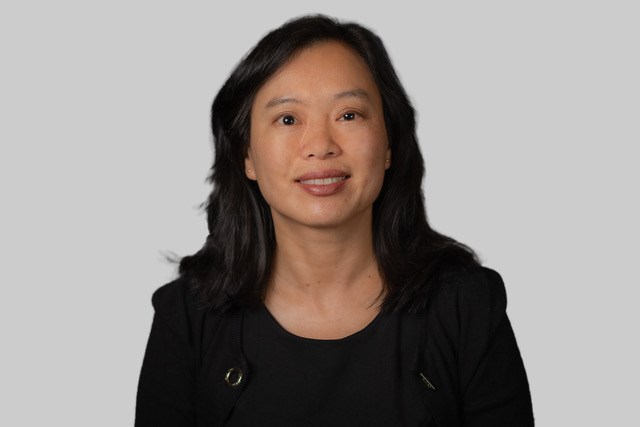
During the forum, which took place at Menlo-Atherton High School, candidates Amy Koo, Suvarna Bhopale, Jo-Ann Byrne Sockolov and Sathvik Nori, responded to publicly submitted questions about student wellness, academic inequity and data-driven policy-making. Koo and Bhopale are vying to represent Area A, which includes Belmont, San Carlos, Redwood Shores and part of Redwood City, while Byrne Sockolov and Nori are running in Area D, which includes Atherton, much of Menlo Park and parts of Redwood City and North Fair Oaks.
The crowd included roughly 30 parents, students and teachers, as well as members of the school’s PTA who hosted and moderated the event.

Byrne Sockolov, a seasoned leader in the education and social nonprofit sectors, served as the Redwood City Education Foundation’s first executive director and for the last six years has worked at Transform Collaborative, a consulting firm she founded to support local social change leaders and organizations. In 2012, she ran an unsuccessful campaign against Joe Ross to represent Area 7 on the San Mateo County Board of Education. A mother of two daughters and graduates of M-A and Sequoia high schools, Byrne Sockolov said she believes “our young people are a powerhouse” and was committed to giving all the opportunity to develop the “skills to live a capable life.”
Nori, the youngest of the four candidates, graduated from M-A in 2021 and is now a Stanford sophomore studying computer science. While in high school, he represented his peers as the Sequoia Union High School District Student Trustee and currently serves as a member of the county’s Juvenile Justice and Delinquency Prevention Commission. The only board candidate who was a direct product of the local schools, the 19-year-old told the audience that the district would benefit from his “fresh and diverse perspective.”
Bhopale also has experience in education leadership, having served as a trustee for the Belmont-Redwood Shores School District for the last nine years, during which she was twice elected president. A lawyer by training, Bhopale switched paths after the birth of her two children and has since dedicated her time to addressing educational and public policy issues, developing school enrichment programs and volunteering as a Mock Trial coach. Her priorities, she said, were three-fold: school safety, sound fiscal policy and student achievement for all.
Koo, also in her second term on the BRSSD school board, said she originally ran for office because of an issue with her son’s enrollment. The problem, she discovered, was a lack of clear and transparent communication within the district. That, along with promoting equity policy to close achievement gaps and foster inclusive and safe environments for all students, has become her rallying cry as a parent leader. Outside of board service, Koo has also worked in various marketing and analytics roles at Gilead Sciences, a biopharmaceutical company.
Now, she said she’s seeking a place on the SUHSD board because she wants “every student to reach their potential.”
Honors-level classes
Whether to keep or remove honors English classes came up several times throughout the debate.
Nori said he was adamantly in favor of continuing to offer AS English, among other advanced academic and extracurricular classes. Addressing concerns around academic inequity, he opposed “bringing those at the top down” and said that he would focus instead on elevating all students and striving towards greater diversity in higher-level classes.

“I want to give all students the support they need to thrive,” he said, adding that he believed students generally “do better with more options, not less.”
Neglecting to comment on honors English specifically, Byrne Sockolov spoke more broadly about addressing academic inequity in the local high schools.
“I think that equity is not a zero-sum game,” she said. The decision to remove honors English, she said, was a way of elevating the discourse among students and teaching them how to be “mentors and coaches to one another.” Expressing concern about the lack of a “common definition” of equity in the district, she called on the district leaders to come up with an “operationalized” understanding of the term.
Koo similarly didn't seem to take a clear stance. Without endorsing protections for AS English classes, she shared Nori’s sentiment about maintaining high expectations for all students.
Pivoting slightly, she emphasized a point that she would return to again later: the importance of making data-driven decisions and communicating the rationale for whatever decision the board ultimately makes.
Bhopale pointed out that, unlike her competitor, Koo, she had direct experience with this issue. The mother of a Carlmont student, she said she had personally seen him benefit from having taken AS English as a freshman. Echoing Nori, she said she believed in promoting equity but not in removing opportunities to do so—though she never explicitly opposed removing honors English.
The issue was revisited at the end during the listener Q&A when a member of the public criticized the candidates for avoiding the question and called on them to take a clear stand.
“AS English. Are you for or against it?” the man asked. “That’s what I came here tonight to find out.”
Still, the candidates mostly stuck to their lines: Nori was firmly against the decision to eliminate honors English, one that he said he watched unfold live during a late-night meeting of the trustees. Though the decision ultimately was made to remove the course offering, he said he was proud of having at least pushed the board to have a more critical discussion before taking a vote.
Byrne Sockolov, for her part, said she appreciated the question but refused to “answer a hypothetical.” Without the “requisite insight to understand why that decision was made,” she said it would be inappropriate for her as a candidate to make a judgmental call. Ultimately, she said, she would never oppose something that would improve students’ achievement outcomes.
Bhopale apologized to the audience and said she “wasn’t trying to dodge the question.” Though she called for a deeper analysis of the outcomes of the decision, she did not explicitly oppose the elimination of honors English.
Koo said she couldn't answer the question without a deep and holistic dive into the data first. The ultimate goal, she said, would be to make sure each student had the best chance at success and was being challenged and supported at their own level.
Oversight of the Superintendent
The candidates were asked to review Superintendent Darnise Williams and discuss their role as her “overseer.” (“She’s not in the room, is she?” Bryne Sockolov quipped to some laughter.)
Koo applauded Williams for hitting the ground running and knowing “how to put an action plan together.” As overseer, she compared the board's relationship with the superintendent to that between a board of directors and a CEO. She said the board should set the direction and vision for the superintendent and have regular check-ins to hold her accountable for implementing those policies.
Having observed SUHSD board meetings for the last two years, Bhopale said she’d learned a lot about the relationship between the leaders and said it was the role of the trustees to evaluate the superintendent by how well she was implementing district goals. She commended the current board’s cordial governance and described the meetings as “very productive.”
Unlike her competitors, Sockolov, declined to comment on Williams.
As members of the public, she said that she and her fellow candidates lacked true insight into how well the superintendent was performing and that any comments would simply be opinions based on what they’d seen, heard or read in the news.
Instead, she said, she wanted to talk about what the board should ask of the superintendent, including specific objectives for student performance, academic outcomes and graduation rates. She also wanted to get a better read on the climate throughout the district and how leaders were advancing equity on each campus.
Nori had a very clear vision for the relationship among the district’s representatives: The board should set the top-level policy that the superintendent would enact. “The board is the what, and the superintendent is the how,” he said, noting that each side should serve as a check and balance on the other.
He called for the board to be more data-driven, particularly when evaluating policies implemented but never fully analyzed. He also said that trustees, as the public’s representatives in the district, should be a bigger presence at the school sites.
Multi-tiered systems of support
The candidates were asked to describe and comment on the efficacy of multi-tiered systems of support (MTSS).
Speaking first, Sockolov described MTSS as a triangular model used to organize students based on their academic and social needs and assign varying levels of support, programs or interventions. While a typical model would have the few, most vulnerable students at the top, Sockolov said that the pandemic caused the tiers to invert, putting a strain on everyone.
“Our teachers and administrators are spending more time with more students, and there just isn’t the capacity and the ability to do that in a healthy and effective way,” she said.
Nori said that the beauty of MTSS was that “students can get the interventions they need.” However, he said, implementing the support programs and reaching those students was easier said than done. Having actually lived through the pandemic as a SUHSD student, he said he would bring a unique perspective and greater insight into the experience of a student receiving special support services.
For her part, Koo said the important thing about MTSS was making sure it was data-driven and based on an accurate assessment of what each student needs. She emphasized that the district leaders shouldn’t “just look at students’ faces and make assumptions” but should actually evaluate the results of intervention programs and policies.
Bhopale said that MTSS was “very much tied in with equity” as a way to ensure every student has what they need to survive.
“There’s a misconception that somehow there’s some group of students that really have weaknesses and some that really have strengths,” she said. “I don’t believe that’s the way it is…We all know our kids have strengths and they have weaknesses.”
The benefit of MTSS, she said, was that it enabled the district to see each student as a unique and complex individual. She endorsed the model and said it should be implemented throughout the district’s schools.
Students v. teachers union
In a callback to the debate over whether or not to return to in-person learning during the pandemic, the candidates were asked how they would handle a situation where students were pitted against the teachers unions.
Bhopale said she hoped to never be in that situation, adding that “we’re all here for the same thing.”
But if faced with such an impasse, she said she'd want to work with her colleagues, talk to interested stakeholders and gather all the facts to make an informed, data-driven decision.
For her part, Koo said that if there was a “wedge issue,” the most important thing would be to “lead with empathy,” something that she said she was well-positioned to do. While her opponent, Bhopale, had more endorsements, she said that much of that was due to “the timing of the campaign,” since Bhopale had announced her campaign earlier.
Koo, however, had a track record of bringing people onto her side, she said. When she ran for BRSSD board, some union members were initially hesitant to support her.
“But I transformed that over time,” she said, noting that she was ultimately endorsed by the teachers union. “I really listen and have an open mind.”
Sockolov said that, while disagreements and misunderstandings were inevitable, it was hard to imagine another situation in which the teachers union and students would be pitted against each other. Should the situation arise, however, the onus would be on the board and superintendent to navigate difficult conversations and model proper conflict resolution.
“We need to have a board and superintendent who are very clear on the rules of engagement, how we will comport ourselves and talk with each other,” she said, adding that she had many years of experience in speech communication skills.
Nori agreed with his colleagues about evaluating all the facts and stakeholder needs to make empathetic, data-driven decisions. However, he added, at the end of the day, everyone in public education is dedicated to serving the students.
“If I believed the interests of students go against the interests of the teachers union, I would advocate for the students,” he said. Following that conviction, he recalled pushing to reopen the schools because he believed the students were best-served by in-person learning.
“I will not apologize for advocating for what’s best for students,” he said.
Weighing in on local politics
Should board members take a stance on measures and propositions?
School boards should first focus on school board decisions, Bhopale said, and not take positions on other issues unless they directly impact the district. As an example, she criticized her opponent, Koo, for asking the trustees of the K-8 BRSSD to take a position on the implementation of an ethnic studies course in California’s high schools—something Bhopale believed was inappropriate.
“It was not our place to insert ourselves in political decisions, and I think that was the right decision,” she said.
Responding to Bhopale, Koo agreed that the board should only weigh in on measures or propositions relevant to the district.
Even if the board decided not to take a position, she said, it was important for members to “stay on top of these issues” and keep the public informed. For issues related to funding, for example, she said members could have an important role in writing public opinions, making endorsements or simply outlining the impact of a new policy on their district.
Nori echoed Bhopale, as well, saying that unless an issue directly affected their district, the board “should not go out there taking a stance.” He called out the trustees of the San Francisco Unified School—which has been embroiled in recent controversies, including the renaming of several schools—for “meddling” in politics and putting their interests over those of the students.
Sockolov said it wasn’t advantageous for the board to take a position on a yes-no question. With measures and props, there are only two possible outcomes, she said: winner or loser. Taking a stance was dangerous because, as she put it, “It's never a good decision for the board to be in the loser camp.”

Still, she said, the district did have a role as a thought-leader and school advocate, including going out into the community to discuss issues before they reach the ballot. As an example, she said the housing crisis affects school districts because the rising cost of rent has exacerbated the challenge of recruiting and retaining quality teachers.
Data-driven decision making
Looking at the board’s current use of data, Koo said that the emphasis so far has been on financial data used primarily to make decisions about what to invest in. There’s an opportunity, she said, “to dive deeper into student data,” including both academic achievements as well as a more holistic view of the students, following them from their feeder districts through high school.
Bhopale said that while the current board is doing a good job of sharing data between the districts and using the numbers to enact new policies, there was room for growth. She supported using data to analyze the impacts of the board’s decisions and study the efficacy of newly implemented policies. For example, she called for a data comparison of school sites with and without the 9th grade AS English option to look for different outcomes among students who went on to pursue AP English.
Sockolov observed that the district’s current data “resides in pieces and parts” and called for a more centralized and streamlined shared database. Describing various sources of data—including dashboards and student surveys—she said that what was missing was an “enterprise-wide system that helps us integrate data” and present it in more clear and visual formats.
Echoing some of his fellow candidates’ comments, Nori said that there was a lack of post-decision-making analysis.
“After we make a policy decision, do we look back and say: do they do what we hope they do?” he asked. “When we come up with snazzy new initiates, let’s not implement them and then forget about it.”
He also said he’d like to see district data made more accessible to all stakeholders, including the public. “Being data driven is really important,” he said, but it’s not just for the benefit of the board members.
“Sequoia owes it [to the public] to be accountable to everyone in the district,” he added. “We should publish data that’s easy to access so anyone can see how successful of a job we’re doing.”
Voters will vote to elect new school board members on Tuesday, Nov. 8. Trustee area maps can be found here.


